-
American Peptides Research Guide 2026: How to Compare Peptides, COAs, Pricing an
LOOT10 offers up to 30% off American Peptides. Compare COAs, research peptides, pricing, volume discounts, and the 2026 catalog.
If you are researching American Peptides as a laboratory supplier, the best approach is to evaluate the <strong style=”font-family: inherit; font-size: inherit;”>material, documentation, quantity, and final purchase price together. American Peptides currently lists a broad research-peptide catalog, product-level COA availability, third-party testing claims, and automatic volume pricing on many listings. The promotional code supplied for August 2026 is <strong style=”font-family: inherit; font-size: inherit;”>LOOT10, advertised as offering <strong style=”font-family: inherit; font-size: inherit;”>up to 30% off qualifying purchases.
For the current offer, start here: American Peptides LOOT10 offer — https://www.americanpeptides.us/loot30
This guide walks through how to evaluate the catalog without getting distracted by a single purity percentage, a coupon headline, or an isolated online review.
What is American Peptides?
American Peptides is an online supplier focused on research-use-only peptide and laboratory products.
Its current research-peptide collection contains 27 single-compound products, including BPC-157, GHK-Cu, AOD-9604, DSIP, Ipamorelin, MOTS-C, PE-22-28, PT-141, Selank, Semax, SS-31, TB-500, Tesamorelin, Thymosin Alpha-1, and others.
The broader catalog also extends beyond individual peptides into combinations, alternative formats, research bundles, bioregulators, and laboratory-related products.
That makes American Peptides particularly interesting for researchers who would rather evaluate multiple materials through one supplier instead of sourcing every compound independently.
The key, however, is qualification.
A large catalog is convenient. A large catalog with documentation that can actually be reviewed is much more useful.
The first question to ask before ordering
Don’t start with:
“Which American Peptides product has the best price?”
Start with:
“What exact material does my research require?”
That changes the entire buying process.
Before comparing suppliers, identify:
-
the exact compound;
-
required quantity;
-
required purity specification;
-
preferred format;
-
documentation requirements;
-
storage requirements;
-
any additional analytical testing your laboratory requires;
-
whether you need one product or several products from the same supplier.
Once those requirements are written down, comparing American Peptides becomes much easier.
You are no longer comparing vague promises. You are comparing whether a particular product satisfies a particular procurement requirement.
What makes the American Peptides catalog different?
The strongest practical feature of a broad catalog is procurement consolidation.
Instead of searching separately for every research material, a laboratory may be able to source multiple compounds from the same storefront.
The current single-compound catalog includes examples such as:
These are current storefront listings and can change, particularly when package sizes or promotional pricing change.
That last point is important.
Never compare two research products using sticker price alone.
A $60 product and a $100 product might have very different package sizes, volume discounts, analytical documentation, or shipping costs.
How to evaluate an American Peptides product page
A product page should be treated as a procurement document, not just a shopping page.
For each product, check five areas.
1. Identity
First confirm that the listed compound is exactly what your research protocol calls for.
Pay attention to:
-
compound name;
-
variant;
-
molecular information where supplied;
-
package size;
-
formulation;
-
product format.
Don’t assume that similarly named materials are interchangeable.
2. Purity
American Peptides currently states on multiple product pages that its research products are verified at ≥99% purity by HPLC and mass spectrometry and are third-party tested.
That is useful information, but it should be treated as one part of the evaluation.
A purity percentage does not automatically answer every quality-control question a laboratory may have.
3. COA availability
American Peptides says a lot-matched Certificate of Analysis is available for its research products.
This is one of the more useful things to verify before purchasing.
The relevant question isn’t simply:
“Does this company have COAs?”
It is:
“Can I connect the COA to the exact lot of the material I am purchasing?”
That distinction matters for research traceability.
4. Testing methods
Look at the actual analytical methods reported.
HPLC and mass spectrometry provide different information, so seeing both referenced is more informative than treating “lab tested” as a complete description of quality.
If your research requires additional testing, determine whether the available documentation addresses those requirements.
5. Commercial terms
Finally, check:
-
package size;
-
quantity pricing;
-
subscription pricing if relevant;
-
shipping;
-
applicable promotions;
-
final checkout price.
This is where the LOOT10 promotion becomes relevant.
How to read a research peptide COA
A useful COA review can be surprisingly systematic.
Product identification
Does the document identify the same compound shown on the product page?
Lot number
Does the lot on the certificate match the material being purchased?
Testing date
How recently was the relevant lot tested?
Analytical method
What analytical technique was used?
Purity result
What purity percentage was reported?
Identity information
Does the report provide information supporting the identity of the material?
Laboratory information
Is the testing laboratory identified clearly enough for the document to be meaningful to your procurement process?
Additional results
Depending on the research project, you may need to consider additional information such as endotoxin, sterility, heavy metals, residual solvents, concentration, or stability.
The key lesson is simple:
A COA is evidence about a tested material or lot. It isn’t a universal guarantee of suitability for every research application.
American Peptides and BPC-157: an example of the evaluation process
BPC-157 is a useful example because it is one of the more prominent products in the current catalog.
The current American Peptides BPC-157 page lists 5 mg and 10 mg options, with the 5 mg option starting at $60. The page describes it as a synthetic pentadecapeptide for laboratory research and lists ≥99% HPLC verification, mass-spectrometry verification, third-party testing, and lot-matched COA availability.
A researcher evaluating it should therefore go beyond the headline price.
Ask:
-
Is the package size appropriate?
-
Does the available COA match the lot?
-
Does the analytical documentation satisfy the laboratory’s requirements?
-
Does purchasing multiple units reduce the per-unit price?
-
Does the current promotion apply?
-
What is the final delivered cost?
That same checklist can be reused for essentially every product in the catalog.
MOTS-C: another example
MOTS-C illustrates why product-level research matters.
American Peptides currently lists MOTS-C from $100 for a 10 mg option, with a 40 mg option also shown. The page describes third-party testing, COA availability, ≥99% purity verification, and volume pricing.
The current page also provides a research-oriented technical overview describing MOTS-C in the context of mitochondrial and metabolic signaling research.
The useful procurement lesson is that a product page can provide several different pieces of information:
identity → research context → analytical claims → package size → pricing → volume pricing → documentation
That is much more useful than evaluating a product based on one number.
PE-22-28 shows why volume pricing matters
PE-22-28 is currently listed at $70 for 10 mg.
The product page displays automatic quantity pricing:
-
3–4 units: $65.10 per unit
-
5–9 units: $62.30 per unit
-
10+ units: $58.80 per unit
The same page also advertises a Subscribe & Save option.
This is why a serious American Peptides pricing comparison should include quantity.
If a laboratory routinely orders several units, the relevant price may not be the standard single-unit price at all.
The same pattern appears across the catalog
MOTS-C, PT-141, DSIP, Epithalon, Selank, Semax, SS-31, and other current listings display similar volume-price structures.
That gives repeat buyers another variable to compare.
A proper purchasing spreadsheet should therefore include:
This is a better method than comparing coupon percentages from different websites.
American Peptides LOOT10 promo code: how to check the actual saving
The promotion supplied for this article is:
Promo code: LOOT10
Advertised saving: up to 30%
Offer link: https://www.americanpeptides.us/loot30
The phrase “up to 30%” deserves attention.
It should not automatically be interpreted as “every product is 30% cheaper.”
Promotional eligibility can depend on the current terms, products, quantities, or other checkout conditions.
The most reliable procedure is:
Step 1: Build the intended cart
Only add products relevant to the actual research requirement.
Step 2: Record the normal subtotal
This gives you a baseline.
Step 3: Check automatic quantity pricing
Some products already display volume discounts.
Step 4: Enter LOOT10
Apply the supplied promotional code.
Step 5: Check the revised total
Look at the actual dollar reduction, not just the advertised maximum percentage.
Step 6: Save the result
Keep the final order confirmation with your procurement documentation.
That gives you an auditable answer to the question:
“How much did LOOT10 actually save on this order?”
Can LOOT10 be combined with volume pricing?
Don’t assume that two discounts automatically stack.
American Peptides currently displays automatic volume pricing on multiple product pages, while LOOT10 is a separate promotional offer.
The correct approach is to test the exact cart.
If the quantity price remains visible after applying LOOT10, record the resulting total. If the system changes one discount or removes another, use the actual checkout calculation.
This is one reason a working American Peptides coupon code should always be verified at checkout rather than copied from an old coupon page.
What else does American Peptides sell?
The individual research-peptide collection is only part of the broader catalog.
Depending on the current storefront, researchers can also encounter:
-
peptide combinations;
-
research bundles;
-
bioregulators;
-
alternative product formats;
-
laboratory supplies;
-
related research products.
This matters for laboratories that want to consolidate purchasing.
However, catalog breadth should never become an excuse to buy unnecessary products.
The correct question remains:
Does this product have a defined role in the research project?
How bundles should be evaluated
Bundles look attractive because they simplify purchasing.
But don’t automatically assume that a bundle is cheaper.
Take the bundle apart on paper:
Bundle price ÷ included components = effective bundle cost
Then compare that result against the current individual-product prices.
Also check whether every included component is actually required.
A discount on a material you don’t need is not a saving.
A smarter supplier comparison framework
When comparing American Peptides against another research supplier, use the same criteria for both.
Documentation
Who provides accessible, lot-specific documentation?
Product availability
Who has the exact material and package size you need?
Analytical information
Which supplier provides the information your protocol requires?
Price
What is the effective cost after quantity pricing?
Shipping
What are the current fulfillment and shipping terms?
Procurement simplicity
Can multiple required materials be sourced through the same supplier?
Record keeping
Can you preserve product, lot, COA, and order information together?
This approach produces a much more useful American Peptides vs research peptide suppliers comparison than simply declaring one website “best.”
Why online reviews should be treated carefully
There are numerous forum posts, blog articles, discussion threads, and promotional pages about peptide suppliers.
Some can be useful.
But there are three very different types of evidence:
Primary evidence: product pages, COAs, SDS documents, published laboratory information, and official commercial terms.
Secondary evidence: independent reviews, research discussions, comparison articles, and forum conversations.
Anecdotal evidence: individual purchasing experiences and comments.
The first category should carry the most weight for procurement decisions.
If a forum post says a supplier provides third-party testing, use that statement as a prompt to find the underlying documentation.
If a review says a product arrived quickly, treat it as an anecdotal fulfillment experience rather than a permanent shipping guarantee.
A practical American Peptides research workflow
Here’s the process I would use before placing a research-supply order.
1. Define the material
Write down the exact compound, quantity, and required specification.
2. Open the current product page
Check the package options and current price.
3. Find the COA
Verify that the documentation is relevant to the lot you intend to purchase.
4. Check analytical information
Confirm that the available testing addresses your laboratory’s requirements.
5. Compare quantity pricing
If multiple units are required, check the automatic volume tiers.
6. Build the complete cost
Include product price and shipping.
7. Apply LOOT10
Enter LOOT10 and verify the actual reduction.
8. Preserve the records
Save the product information, COA, order confirmation, and final price.
That eight-step process is simple enough to repeat every time.
The biggest mistake: buying based on “99.9%”
Several current American Peptides product pages display 99.9% purity as a headline product attribute.
It is an attractive number.
But a laboratory buyer should still ask:
99.9% of what, measured how, for which lot, using which method?
That question is much more valuable than the number itself.
The same principle applies to any research supplier.
Another mistake: assuming a coupon determines the best supplier
Suppose Supplier A gives 30% off.
Supplier B gives 10% off.
That does not automatically make Supplier A cheaper.
The actual calculation is:
product price + package quantity + shipping − applicable discount
A 30% discount on a higher-priced package can still result in a higher final cost.
And a cheaper product is not automatically preferable if its documentation does not meet the research requirement.
What American Peptides does well
Based on the current storefront, the strongest aspects to investigate are:
-
Broad catalog: the current single-compound collection contains 27 research peptides.
-
Product-level documentation: current listings repeatedly advertise COA availability and third-party testing.
-
Volume pricing: many product pages show automatic quantity discounts.
-
Multiple formats and categories: the broader storefront extends beyond individual peptide listings.
-
Domestic fulfillment claims: current product pages state that qualifying orders ship from a U.S. facility.
Those are useful procurement advantages.
They still need to be matched against the requirements of your specific laboratory.
One limitation worth keeping in mind
No supplier page can answer every question about every research application.
A COA can provide analytical information about a tested lot. It cannot guarantee that a material will perform identically in every assay or experimental system.
Likewise, a large catalog does not automatically mean every listed product is appropriate for every laboratory.
Supplier qualification remains a project-specific responsibility.
Final American Peptides buying checklist
Before you click the final purchase button, check:
-
Exact compound confirmed
-
Correct package size selected
-
Current product specifications reviewed
-
Lot documentation located
-
COA reviewed
-
Analytical methods checked
-
Quantity pricing compared
-
Shipping cost checked
-
LOOT10 entered
-
Final discount confirmed
-
Final order total recorded
-
COA and order confirmation saved
If those boxes are checked, you have done substantially more due diligence than someone choosing a supplier solely because a coupon page says “30% off.”
Final verdict: is American Peptides worth evaluating?
For researchers looking for a broad online catalog, American Peptides has several practical reasons to make the shortlist: its current collection covers a wide range of research peptides, individual listings provide detailed product information, many listings advertise lot-matched COAs and third-party testing, and volume pricing is visible on numerous products.
The real advantage is not simply the number of compounds.
It is the ability to apply one consistent procurement process across a large catalog.
Identify the material. Check the documentation. Compare the quantity economics. Then check the promotion.
For the supplied August 2026 offer, that means entering LOOT10 and confirming the actual saving displayed by the checkout.
If the code is accepted for the products in your cart, it can reduce the final procurement cost by the amount shown at checkout, with the supplied promotion advertising savings of up to 30%.
Check the American Peptides offer here: https://www.americanpeptides.us/loot30
FAQ: American Peptides Promo Code and DiscountWhat is the American Peptides promo code for August 2026?
The promotional code supplied for this guide is LOOT10, advertised as providing up to 30% off qualifying purchases.
Does the American Peptides LOOT10 code really give 30% off?
The offer is advertised as up to 30% off, so 30% should not be assumed for every product or order. Enter the code and check the actual cart reduction.
How do I use the American Peptides discount code?
Add eligible products to your cart, continue to checkout, enter LOOT10, and verify that the promotional reduction appears in the order total.
Can I use LOOT10 with American Peptides volume pricing?
Don’t assume the discounts stack. Test the exact quantity and cart at checkout and use the resulting final price for your comparison.
What is the best way to get American Peptides cheaper?
Compare the normal price, package size, automatic volume pricing, shipping, and any applicable LOOT10 discount. The final delivered price is the meaningful figure.
Does American Peptides have a volume discount?
Many current product pages display automatic quantity pricing. PE-22-28, for example, currently shows progressively lower per-unit prices at quantities of 3–4, 5–9, and 10+.
Does American Peptides offer free shipping?
Current product pages advertise free shipping on qualifying orders over $300. Verify the current threshold and shipping charge in the live cart because commercial terms can change.
Where can I find American Peptides COAs?
Current product pages state that lot-matched COAs are available, and American Peptides also maintains COA documentation for its research products.
Is an American Peptides COA enough to verify a research peptide?
A COA is an important part of supplier qualification, but the required level of documentation depends on the laboratory, protocol, and material.
Are American Peptides products for human use?
The current product pages identify the products as research-use-only materials. They should be evaluated strictly in the laboratory-research context described by the supplier.
Reference links supplied for this guide
The following pages were supplied as external references. They can be useful for discovering discussion topics and independent commentary, but current commercial and product claims should be verified against the official American Peptides site.
-
Peptide Talk Forum — American Peptides review
-
Peptide Talk Forum — American Peptides research guide
-
ForumPeptide — supplier review
-
ForumPeptide — research guide
-
PeptideForum — August 2026 promotion
-
Academia Stack Exchange — LOOT10 discussion
-
DEV — August 2026 promotion
-
Differ — promotion discussion
-
Differ — research guide
-
Substack — American Peptides vs. Protide Health
-
Internet Archive — research peptide suppliers
-
Peptides Research Guide — American Peptides review
-
Medium — August 2026 promotion
-
Peptides Research Guide — coupon discussion
-
Quantum Prism — August discount discussion
-
MedHelp Forums — promotion discussion
-
Promethious — LOOT10 promotion
-
Promethious — research guide
-
IEEE Open Source — research snippets
-
Substack — promotion reference
-
Internet Archive — LOOT30 reference
-
Research peptide COA guide
-
Medium — LOOT30 discussion
-
MedHelp Forums — supplier discussion
-
Quantum Prism — LOOT30 discussion
-
Differ — LOOT30 research guide
-
Promethious — LOOT30 promotion
-
DEV — LOOT30 research guide
-
Differ — LOOT30 promotion
-
DEV — supplier comparison
-
DEV — supplier roundup
-
IEEE Open Source — research snippet
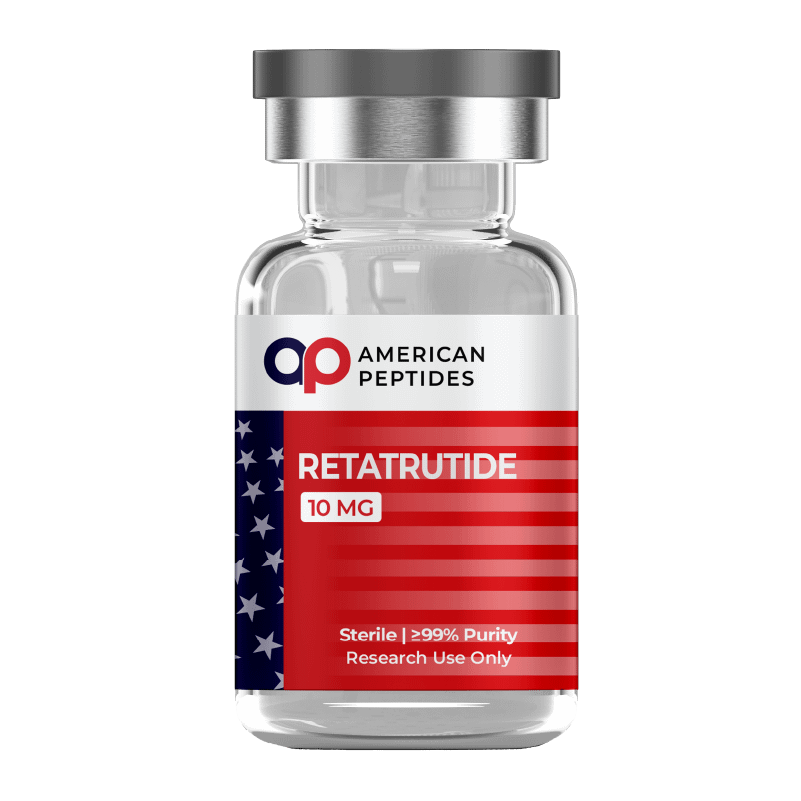
americanpeptides.us
American Peptides — Research-Grade Peptides — Third-Party Tested
Research-grade peptides, third-party tested with a Certificate of Analysis available for every lot. For laboratory and research use only.
-
Sorry, there were no replies found.
Log in to reply.