
-
Semaglutide vs Tirzepatide vs Retatrutide vs Cagrilintide: American Peptides
American Peptides promo code <strong style=”font-family: inherit; font-size: inherit;”>LOOT10 is advertised as offering <strong style=”font-family: inherit; font-size: inherit;”>up to 30% off eligible GLP-1 & Metabolic research products. This comparison explains how semaglutide, tirzepatide, retatrutide and cagrilintide differ in research context, pricing, documentation and supplier evaluation before you check the discount.
The quick comparison
American Peptides currently groups five products under its GLP-1 & Metabolic category:
*Current catalog snapshot; prices, availability and promotional eligibility can change. (American Peptides)
The products are not interchangeable simply because they appear in the same category. Their research targets differ, so the right choice begins with the experimental question rather than the discount.
The current promotion supplied for this guide is LOOT10, advertised as offering up to 30% off eligible purchases.
Check the current American Peptides GLP-1 & Metabolic collection →
Why this comparison matters
Search results around GLP-1 peptides often mix together three different things:
-
Research compounds
-
Investigational pharmaceutical programs
-
FDA-approved prescription medicines
Those categories should not be treated as the same.
American Peptides explicitly positions its catalog as laboratory and research use only, not for human or veterinary use. (American Peptides)
So this comparison focuses on the research-supplier context: pathway, documentation, testing, pricing and procurement.
For a broader background discussion, see the GLP-1 & Metabolic Research Peptides: A Complete Guide to American Peptides.
Semaglutide: GLP-1 receptor-focused research
Semaglutide is the lowest-priced starting point in the current American Peptides collection, listed from $60. (American Peptides)
Its research relevance comes from its relationship with the GLP-1 receptor.
For a researcher, that means semaglutide can serve as a straightforward starting point when the experiment is focused on GLP-1 receptor pharmacology or signaling.
What to check before buying semaglutide
The important procurement questions are:
-
Which quantity is being purchased?
-
What is the current lot?
-
Is a lot-matched COA available?
-
What purity is reported?
-
What analytical methods are documented?
-
Does LOOT10 change the final price?
American Peptides maintains a public COA library containing lot-specific semaglutide documentation. (American Peptides)
The pharmaceutical distinction
Semaglutide is also the active ingredient in approved medicines. That does not make a research-use-only listing equivalent to an approved prescription product.
For a supplier comparison, keep the two contexts separate:
Research material ≠ approved pharmaceutical product
That distinction is part of responsible research procurement.
Tirzepatide: dual GLP-1/GIP research
Tirzepatide currently starts at $100 in the American Peptides collection. (American Peptides)
Its research distinction is that it engages both GLP-1 and GIP receptors, making it different from a GLP-1-only research model.
This gives researchers a useful comparison point:
Semaglutide → GLP-1 receptor
Tirzepatide → GLP-1 + GIP
What makes tirzepatide useful for comparison?
A dual-pathway compound can help frame experiments around differences between single- and dual-receptor signaling.
From a purchasing perspective, however, the same supplier checks apply:
-
exact compound,
-
exact quantity,
-
lot-matched documentation,
-
purity,
-
identity testing,
-
current price,
-
and final price after the promotion.
The American Peptides COA library currently includes multiple tirzepatide lot records. (American Peptides)
Retatrutide: a three-receptor research model
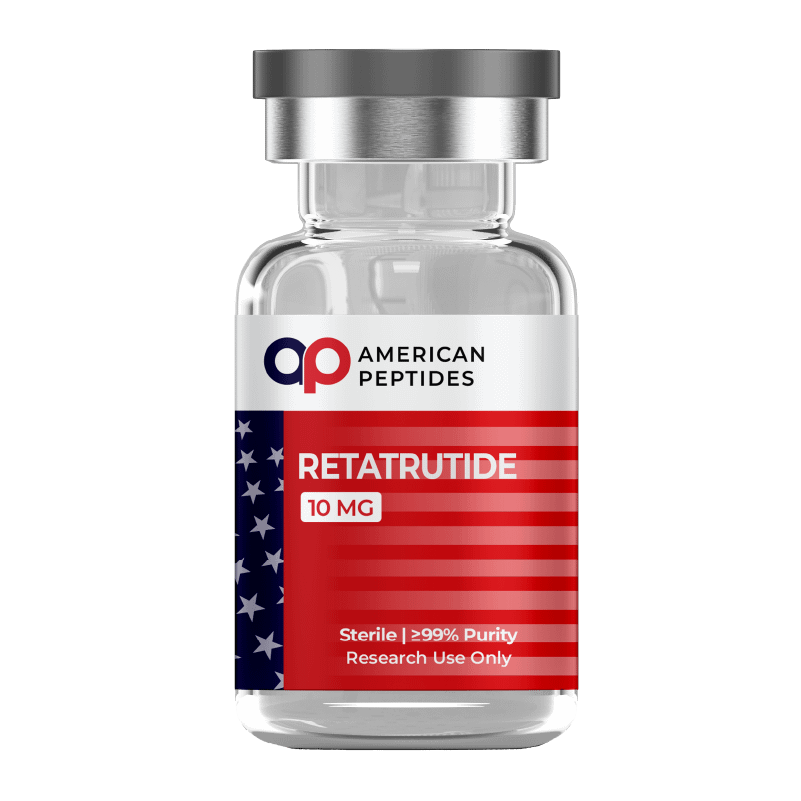
Retatrutide currently starts at $105.
American Peptides describes it as a research peptide associated with GLP-1, GIP and glucagon receptor activity, giving it a broader receptor profile than semaglutide or tirzepatide. (American Peptides)
That makes retatrutide particularly interesting when the research objective concerns multi-receptor metabolic signaling.
Why retatrutide should be treated differently
Retatrutide is an investigational compound rather than an FDA-approved medicine.
That makes supplier documentation and research-use positioning particularly important.
The American Peptides COA library currently lists multiple retatrutide lots and quantities, providing a way to inspect batch-level documentation rather than relying only on a product-level description. (American Peptides)
For someone searching for an American Peptides retatrutide research peptide, the useful evaluation is:
research fit + documentation + quantity + final price
not merely “which retailer sells it cheapest?”
Cagrilintide: the amylin-pathway comparison
Cagrilintide is the most obvious example of why this isn’t simply a “GLP-1 ranking” article.
American Peptides currently lists cagrilintide at $170, and its research relevance is associated with the amylin pathway rather than simply GLP-1 receptor activity. (American Peptides)
So if the experimental question concerns amylin-related signaling, a $170 product may be more relevant than a $60 product.
That’s an important lesson for any research purchasing decision:
Lowest price and best value are not always the same thing.
Retatrutide + Cagrilintide: the combined option
American Peptides currently lists the retatrutide + cagrilintide research combination at $200. (American Peptides)
The product adds another layer to the comparison because the buyer is evaluating a combined research material rather than a single compound.
For pricing, compare the effective unit cost, not simply the package price.
For larger orders:
Effective unit cost = final eligible order total ÷ number of units
That makes it easier to compare the combination with other purchase structures.
Semaglutide vs tirzepatide vs retatrutide vs cagrilintide
Here’s the comparison at a glance:
The important part is the middle column.
The price difference makes sense only after the research objective is understood.
Which one is “best” for research?
There isn’t one universal answer.
A better approach is to map the experiment to the research target.
For GLP-1 receptor-focused research
Semaglutide is the straightforward product to investigate.
For GLP-1 + GIP research
Tirzepatide provides a dual-receptor model.
For GLP-1 + GIP + glucagon research
Retatrutide provides the broader receptor profile.
For amylin-pathway research
Cagrilintide offers a different pathway focus.
For combined retatrutide/cagrilintide work
The retatrutide + cagrilintide product provides the combined research material.
This is a research-selection framework, not a therapeutic ranking.
The biggest mistake: choosing by discount first
It’s tempting to search:
American Peptides coupon code
and immediately buy whichever item has the largest advertised discount.
A stronger process is:
1. Identify the research question.
2. Identify the appropriate compound.
3. Review the lot documentation.
4. Compare quantity and base price.
5. Apply LOOT10.
6. Verify the final checkout total.
That makes the promotion a useful price optimization tool rather than a substitute for product selection.
What does LOOT10 mean for these products?
The promotion supplied for this campaign is:
LOOT10
Advertised savings:
Up to 30% off eligible purchases
The phrase “up to” is important.
For example:
These are illustrative calculations only. They demonstrate the arithmetic at different discount levels; they do not claim that LOOT10 applies at every percentage to every product.
The actual cart is the final authority.
How to redeem LOOT10
To check the current promotion:
-
Select the research compound.
-
Select the quantity.
-
Review the current product information.
-
Check the available COA.
-
Add the product to the cart.
-
Enter LOOT10.
-
Verify the discount and final total.
-
Compare the result with any automatic volume pricing.
This last step matters.
If a product already has a quantity discount, the coupon may or may not produce the lower final price.
COA comparison: what separates a useful supplier from a marketing page?
A product page can say:
≥99% purity
That’s useful, but it doesn’t answer every procurement question.
A better research-supplier comparison looks at:
Lot number
Can the test report be tied to the actual batch?
Purity method
Was purity measured by a stated analytical method?
Identity
Was molecular identity independently confirmed?
Testing date
When was the material analyzed?
Laboratory
Who conducted the test?
Additional quality checks
Are other relevant screening procedures documented?
American Peptides currently maintains a public COA library and says its research products are independently tested and supported by lot-matched certificates. (American Peptides)
For additional context, see the American Peptides GLP-1 research supplier guide.
HPLC vs mass spectrometry
One of the most useful distinctions in peptide testing is the difference between purity analysis and identity confirmation.
HPLC
High-performance liquid chromatography can separate components in a sample and help assess chromatographic purity.
Mass spectrometry
Mass spectrometry provides molecular-mass information and can support identity confirmation.
They answer different questions.
American Peptides’ educational material explains that using HPLC and mass spectrometry together creates a more complete analytical picture than relying on either alone. (American Peptides)
For supplier evaluation, a useful rule is:
Don’t compare purity percentages without comparing the testing method behind them.
Beyond HPLC and mass spectrometry
American Peptides currently describes additional testing around its research materials, including:
-
endotoxin screening,
-
sterility testing,
-
heavy-metal screening,
-
batch consistency,
-
and net-content verification. (American Peptides)
These are not redundant tests.
A high purity number does not automatically answer questions about endotoxin, sterility or trace heavy metals.
That is why a useful research supplier checklist covers more than one analytical result.
Why lot matching matters more than a generic COA
Imagine a supplier publishes one COA for “semaglutide” but ships material from five different batches.
The certificate proves something about the tested batch.
It does not automatically prove the same result for every other batch.
American Peptides’ public documentation approach is built around lot-specific certificates, which gives buyers a way to connect the report to a particular production lot. (American Peptides)
For laboratory record keeping, that traceability can be useful well beyond the original purchase.
A simple GLP-1 research supplier scorecard
Use the same framework for American Peptides and its competitors:
This scorecard is deliberately supplier-neutral.
That makes the recommendation more credible because readers can apply it to other vendors too.
What American Peptides currently offers beyond GLP-1
The company isn’t limited to this category.
Its current catalog includes:
-
GLP-1 & Metabolic
-
Research Peptides
-
Peptide Blends
-
Nasal Sprays
-
Dissolving Strips
-
Bioregulators
-
Research Bundles
-
Lab Supplies
-
Merchandise (American Peptides)
The broader catalog includes research products such as BPC-157, CJC-1295, GHK-Cu, IPAMORELIN, MOTS-C, NAD+, Selank, Semax, Sermorelin, SS-31, TB-500 and others. (American Peptides)
This broader lineup can be useful for laboratories whose procurement needs extend beyond metabolic research.
How this comparison fits with the other guides
This article is best used as the compound-comparison layer in the broader American Peptides content cluster.
For the full research-category overview:
GLP-1 & Metabolic Research Peptides: A Complete Guide to American Peptides
For the dedicated promotional page:
American Peptides Promo Code LOOT10: Up to 30% Off GLP-1 & Metabolic Research Peptides
For a GLP-1 & Metabolic overview:
American Peptides GLP-1 & Metabolic
For the deal-analysis companion:
American Peptides GLP-1 & Metabolic Deal Guide
For another supplier-focused reference:
American Peptides GLP-1 Research Supplier Guide
For the supplementary research resource:
American Peptides GLP-1 research resource
For the additional article:
American Peptides GLP-1 & Metabolic research article
For the latest supporting comparison/reference:
American Peptides GLP-1 research comparison
For the supplementary discussion:
American Peptides research discussion
These pages serve different intents: educational background, supplier evaluation, deal analysis, pricing, product comparison and promotional discovery.
FAQ: semaglutide vs tirzepatide vs retatrutide vs cagrilintideWhat is the American Peptides promo code for August 2026?
The supplied promotion is LOOT10, advertised as offering up to 30% off eligible purchases. Verify the final cart because promotional terms can change.
Which American Peptides GLP-1 research product is cheapest?
The current starting price is $60 for semaglutide, followed by $100 for tirzepatide and $105 for retatrutide. (American Peptides)
Is semaglutide or tirzepatide better for research?
Neither is universally “better.” Semaglutide is associated with GLP-1 receptor research, while tirzepatide provides a GLP-1/GIP research profile. The appropriate choice depends on the experimental question.
What is the difference between tirzepatide and retatrutide for research?
Tirzepatide is associated with GLP-1/GIP activity, while retatrutide is associated with GLP-1/GIP/glucagon receptor activity. (American Peptides)
Why would a researcher choose cagrilintide?
Cagrilintide provides an amylin-pathway research option, making it relevant when the experimental question extends beyond GLP-1/GIP receptor signaling.
Does LOOT10 give 30% off every product?
No guarantee should be assumed. The offer is advertised as up to 30% off, so check the actual eligible discount at checkout.
Does American Peptides provide lot-matched COAs?
Yes. The company currently maintains a public COA library with lot-specific documents for multiple GLP-1 & Metabolic products. (American Peptides)
How do I use LOOT10?
Choose the relevant research product, add it to the cart, enter LOOT10 in the applicable promotion field, and verify the final price.
Can LOOT10 be combined with volume pricing?
Do not assume promotions stack. Compare the actual final totals shown by checkout.
Are American Peptides GLP-1 products for human use?
No. American Peptides states that its products are for laboratory and research use only and not for human or veterinary use. (American Peptides)
Final verdict: the right compound comes before the right coupon
There is no single “best” GLP-1 research peptide.
There is a better question:
Which research material best matches the experimental objective, and which supplier provides the documentation and price structure that fit the project?
The current American Peptides collection provides five distinct choices:
Semaglutide — GLP-1 receptor focus.
Tirzepatide — GLP-1/GIP focus.
Retatrutide — GLP-1/GIP/glucagon focus.
Cagrilintide — amylin focus.
Retatrutide + Cagrilintide — combined research material.
American Peptides also provides a public lot-specific COA library and describes a multi-layer testing program around identity, purity and additional quality checks. (American Peptides)
Then there is the financial side.
The supplied promotional code is:
LOOT10
Advertised savings:
Up to 30% off eligible purchases.
So use the code at the end of the decision process:
Match the compound → verify the documentation → compare the quantity price → apply LOOT10 → check the final checkout total.
Check the current American Peptides GLP-1 & Metabolic collection and try LOOT10
americanpeptides.us
American Peptides — Research-Grade Peptides — Third-Party Tested
Research-grade peptides, third-party tested with a Certificate of Analysis available for every lot. For laboratory and research use only.
-
Sorry, there were no replies found.
Log in to reply.