-
What’s New at American Peptides in 2026? Catalog, COA Testing, Research Library
American Peptides has changed noticeably in 2026, with a broader research catalog, a much more developed education library, and a stronger emphasis on batch-level quality documentation. The current storefront lists <strong style=”font-family: inherit; font-size: inherit;”>46 research-grade peptides within 129 total product listings, while the company’s 2026 publishing activity now covers COAs, HPLC, mass spectrometry, third-party testing, research standards, and individual peptide research topics.
If you’re checking American Peptides for the first time in 2026, the biggest change isn’t one particular new peptide. It’s the way the company now presents its catalog and the analytical information surrounding its products.
For the current promotional offer, use code LOOT10, advertised as up to 30% off, and verify the exact saving at checkout.
American Peptides LOOT10 offer: American Peptides LOOT10 offer
What changed at American Peptides in 2026?
There are four clear developments worth watching:
-
The catalog is broader. The current all-products page lists 46 research-grade peptides within 129 total product listings, including individual compounds, combinations, bundles, dissolving strips, nasal formats, research supplies, and related products.
-
COA education has become a major part of the site. American Peptides published a series of 2026 articles explaining COAs, purity, net peptide content, HPLC, mass spectrometry, and third-party testing.
-
The research library is now much more substantial. By July 2026, the company was publishing research explainers on subjects including MOTS-c, Selank, Semax, GHK-Cu, cellular aging, metabolism, sleep, and other peptide-related topics.
-
Quality documentation is more prominently positioned. The company says batches are independently tested across purity, identity, sterility, endotoxins, and heavy metals, with COAs published before purchase. Those are company claims, so researchers should still inspect the actual documentation for the specific lot they are evaluating.
Together, those changes make the 2026 American Peptides storefront feel more like a research catalog plus education and documentation hub than a simple product shop.
The 2026 catalog is bigger and more varied
The current catalog includes individual research peptides such as BPC-157, GHK-Cu, MOTS-C, Ipamorelin, Selank, Semax, TB-500, Tesamorelin, AOD-9604, DSIP, Humanin, IGF-1 LR3, P-21, PE-22-28, PT-141, Sermorelin, SS-31, and others.
But the more interesting change is the number of formats surrounding those individual products.
The 2026 catalog also includes:
-
Research peptide combinations
-
Research bundles
-
Premium blends
-
Dissolving-strip products
-
Nasal research formats
-
Bioregulator products
-
Research supplies
-
Quantity-based pricing options
The current product page, for example, lists combinations such as CJC-1295 + Ipamorelin, CJC-1295 + GHRP-6, and Tesamorelin + Ipamorelin, alongside bundles such as GLOW, IMMUNO, IRONCLAD, NAD STACK, NEURO, PRIME, PULSE, REPAIR+, and WOLVERINE.
That gives researchers more ways to browse the catalog, but it also makes product evaluation more important. A bundle or combination should be assessed by looking at its exact components and documentation rather than assuming that a packaged product is automatically equivalent to evaluating each component separately.
The biggest 2026 change may be the COA library
The most obvious editorial shift on the site is the attention given to Certificates of Analysis.
American Peptides’ 2026 research library now includes dedicated explanations of:
-
What a COA is
-
How to read a peptide COA
-
HPLC versus mass spectrometry
-
Peptide purity
-
Net peptide content versus purity percentage
-
Third-party testing
-
Research-peptide quality standards
The company’s COA guide says a credible research-peptide COA should connect identity and purity results to a specific production lot. It also describes mass spectrometry for identity confirmation and HPLC for purity measurement.
That is useful because “99% purity” by itself is a very compressed statement. A researcher evaluating a supplier wants to know what was tested, how it was tested, and which batch the result applies to.
HPLC and mass spectrometry are now explained more clearly
One of the more useful 2026 additions is the site’s explanation of the difference between HPLC and mass spectrometry.
The simple version is:
HPLC helps evaluate purity.
Mass spectrometry helps confirm molecular identity.
They are not duplicate tests. They answer different analytical questions. American Peptides’ April 2026 article specifically explains why the two results should be read together when reviewing a peptide COA.
That is a meaningful improvement for anyone who is new to research-supplier documentation.
Instead of seeing “≥99% purity” and stopping there, a researcher can ask:
-
Is the result tied to the relevant lot?
-
Is there an HPLC purity result?
-
Is molecular identity supported by mass spectrometry?
-
Is the testing laboratory identified?
-
Are additional quality attributes reported?
Those questions provide a much better framework for comparing suppliers.
Third-party testing has become a central 2026 message
American Peptides published a dedicated article in April 2026 arguing that independent third-party testing is a key quality signal for research suppliers. The company says every batch is tested by an independent laboratory and that COAs are published rather than supplied only on request.
That is a company-reported process, not something readers should treat as a substitute for checking the actual documents.
Still, the shift is significant from a content and buying perspective. The site is now making verification and traceability part of its core value proposition.
For a researcher, the useful question is not merely “Does this supplier say it is tested?”
It is:
“Can I inspect the documentation associated with the material I am evaluating?”
American Peptides has built a more serious research education hub
Another clear 2026 development is the expansion of the American Peptides research blog.
The site now describes its Research Library as a collection covering peptide quality, COA interpretation, lyophilization, storage, and the science behind the products it ships.
The publishing activity is also much broader than basic product descriptions.
In July 2026, the research library included articles on:
-
MOTS-c research
-
Selank research
-
Semax research
-
GHK-Cu research
-
Cellular aging and longevity biology
-
Metabolism and appetite biology
-
Sleep and recovery biology
-
Brain fog and cognitive biology
-
Other research topics
This matters for SEO and for actual researchers because the site is increasingly answering the questions people have before they ever reach a product page.
The site is publishing more research terminology guides
The 2026 education content includes a glossary-style explanation of common peptide research terms, including HPLC and mass spectrometry.
For beginners, this is one of the more useful changes because peptide supplier terminology can be surprisingly dense.
Terms such as:
-
HPLC
-
Mass spectrometry
-
COA
-
Lot number
-
Purity
-
Net peptide content
-
Lyophilization
-
Research use only
-
Third-party testing
can sound interchangeable when they are not.
The expanded educational content gives researchers a way to understand the documentation before deciding whether a particular product belongs on a shortlist.
The catalog now has more bundle and format options
The 2026 product catalog includes a noticeable number of preconfigured bundles and combinations.
This is useful for catalog discovery, but it also creates a new comparison problem: single product versus combination versus bundle.
The appropriate choice depends on the research requirement, not on which package has the most items.
What about pricing in 2026?
The current catalog shows a wide price range.
Examples on the live product page include:
-
Ipamorelin from $40
-
BPC-157 from $60
-
GHK-Cu from $50
-
MOTS-C from $100
-
Tesamorelin from $120
-
Humanin at $150
-
DIHEXA at $140
-
Cagrilintide at $170
-
RTA-CAG at $200
The site also shows automatic savings on selected bundles and quantity-based pricing on some products.
Because prices can change, the right way to use these numbers is as a current 2026 snapshot, rather than a permanent price list.
What is new about American Peptides pricing strategy?
The important development is not simply that individual products have different prices.
The catalog now gives buyers several pricing structures to compare:
Individual product pricing — the standard listed price.
Volume pricing — lower per-unit prices on eligible quantities.
Bundle pricing — selected bundles show a discount against their combined reference price.
Subscribe & Save — eligible products can offer recurring-order savings.
Promotional codes — the supplied August 2026 code is LOOT10, advertised as up to 30% off.
That makes the final checkout price more important than the headline product price.
How does LOOT10 fit into the 2026 changes?
LOOT10 is the promotional angle rather than a catalog or testing change.
For this article, the supplied August 2026 offer is:
Promo code: LOOT10
Advertised saving: up to 30% off
Because the promotion is described as “up to” 30%, readers should verify the actual discount applied to their eligible order at checkout.
Check the American Peptides LOOT10 promotion: American Peptides LOOT10 promotion
The code should be treated as a current promotional offer, not a permanent pricing guarantee.
What is the most important American Peptides update in 2026?
If you only remember one thing, make it this:
American Peptides has put much more emphasis on documentation and research education in 2026.
The bigger catalog is useful. The additional formats are useful. The bundles are useful.
But the stronger change is that the site now spends substantial space explaining how researchers should evaluate peptide quality.
The company has published dedicated material on COAs, purity, net peptide content, HPLC, mass spectrometry, third-party testing, and research standards.
That makes the supplier easier to evaluate on something more meaningful than product names and marketing descriptions.
What has not changed?
Despite the new catalog and education content, the fundamental research-use distinction remains.
American Peptides describes its products as being for laboratory and academic research and not for human or veterinary consumption. Its educational content likewise frames the material around laboratory research.
So the 2026 changes should not be interpreted as a change from research supplier to consumer medical provider.
The better interpretation is that American Peptides has expanded its research catalog, documentation, and educational infrastructure.
Is American Peptides different in 2026?
Yes — but the difference is mainly in breadth and transparency of presentation.
The current site combines:
-
A larger product catalog
-
Multiple product formats
-
More bundles and combinations
-
A dedicated COA education section
-
More research explainers
-
More detailed terminology guidance
-
Stronger emphasis on third-party testing
-
Published lot-level documentation
-
Multiple pricing mechanisms
For someone evaluating the supplier in 2026, that means there is considerably more information to work through before choosing a product.
What should researchers check before buying?
A sensible 2026 evaluation can be kept simple.
Check the exact product
Confirm the compound name, format, quantity, and current listed price.
Check the lot documentation
Look for the relevant COA and verify that the lot or batch information corresponds to the material being evaluated.
Check the analytical methods
Look for the stated purity method and identity confirmation. HPLC and mass spectrometry answer different questions, so don’t treat them as interchangeable.
Check the total price
Compare the listed price with any volume pricing, bundle savings, Subscribe & Save option, and applicable promotion.
Check the research-use status
Keep the product’s stated laboratory/research purpose separate from claims or discussions about human use.
What’s the bottom line for American Peptides in 2026?
The biggest American Peptides story in 2026 is not a single new peptide.
It is the expansion of the entire research-supplier ecosystem around the catalog.
The company now presents a larger catalog, more combinations and bundles, more research formats, and a much more developed library explaining COAs and analytical testing. The current storefront lists 46 research-grade peptides within 129 total product listings, while the research library has added a steady stream of technical and educational content throughout 2026.
For researchers comparing suppliers, that makes documentation a more useful starting point than marketing language.
And for buyers looking for the current promotional offer, LOOT10 is advertised as up to 30% off for the supplied August 2026 promotion. Verify the exact discount at checkout before completing an eligible research-supply order.
Frequently Asked QuestionsWhat is new at American Peptides in 2026?
The major 2026 developments include a broader catalog, additional bundles and formats, a substantially expanded research education library, and a stronger focus on COAs, HPLC, mass spectrometry, and third-party testing.
How many research peptides does American Peptides list in 2026?
The current catalog states 46 research-grade peptides within 129 total product listings. The total includes individual compounds as well as combinations, bundles, supplies, and other catalog items.
What changed in the American Peptides COA policy in 2026?
The company has made COA documentation much more prominent in its 2026 research library and says COAs are published and indexed by lot. Researchers should still review the actual document associated with the material being evaluated.
Does American Peptides use third-party testing in 2026?
American Peptides says its batches are tested by independent third-party laboratories and that testing covers purity, identity, sterility, endotoxins, and heavy metals. This is a company-reported quality process, so researchers should inspect the available documentation rather than relying only on the claim.
What is the American Peptides LOOT10 promo code for August 2026?
The supplied August 2026 promotional code is LOOT10, advertised as up to 30% off. The exact discount should be confirmed at checkout because “up to” does not mean every product necessarily receives 30% off.
How do I use the American Peptides LOOT10 discount?
Enter LOOT10 in the applicable promotional field during checkout and verify that the expected saving is reflected in the final order total.
What is new in the American Peptides research library?
The 2026 research library has expanded into COA education, analytical testing, peptide research explainers, research terminology, and broader biology topics. Recent articles cover subjects including MOTS-c, Selank, Semax, GHK-Cu, aging, metabolism, sleep, and cognition.
Are American Peptides products for human use?
The company states that its products are intended strictly for laboratory and academic research and are not intended for human or veterinary consumption.
Final Takeaway
If you searched for what’s new at American Peptides in 2026, the clearest answer is: more products, more formats, more research education, and a much stronger emphasis on analytical documentation.
The current catalog has expanded to 46 research-grade peptides and 129 total listings, while the company’s 2026 research library now provides dedicated resources for understanding COAs, purity, HPLC, mass spectrometry, third-party testing, and peptide research topics.
For researchers, that shift toward documentation is arguably more important than any individual catalog addition.
For buyers checking the August 2026 promotion, the supplied code is LOOT10, advertised as up to 30% off. Confirm eligibility and the final discount at checkout.
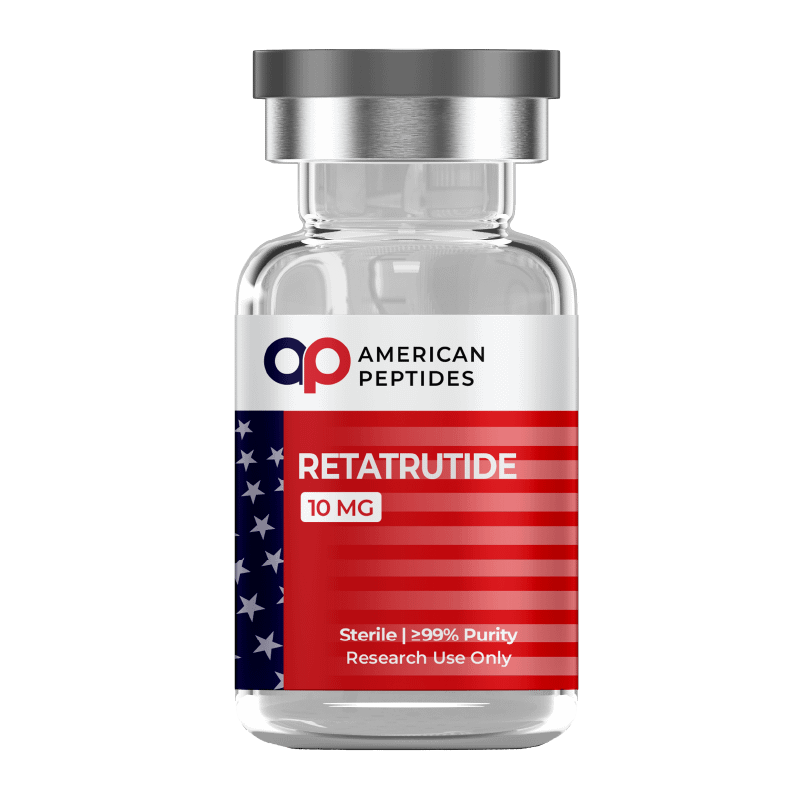
americanpeptides.us
American Peptides — Research-Grade Peptides — Third-Party Tested
Research-grade peptides, third-party tested with a Certificate of Analysis available for every lot. For laboratory and research use only.
-
Sorry, there were no replies found.
Log in to reply.